What Gap's Employee Creator Program Confirms About the Future of Social Commerce
Gap Inc. expanded its Creator Affiliate Program to employees in July 2026. The move confirms a growing industry shift toward employee-generated content as a high-converting, cost-effective complement to traditional creator marketing.
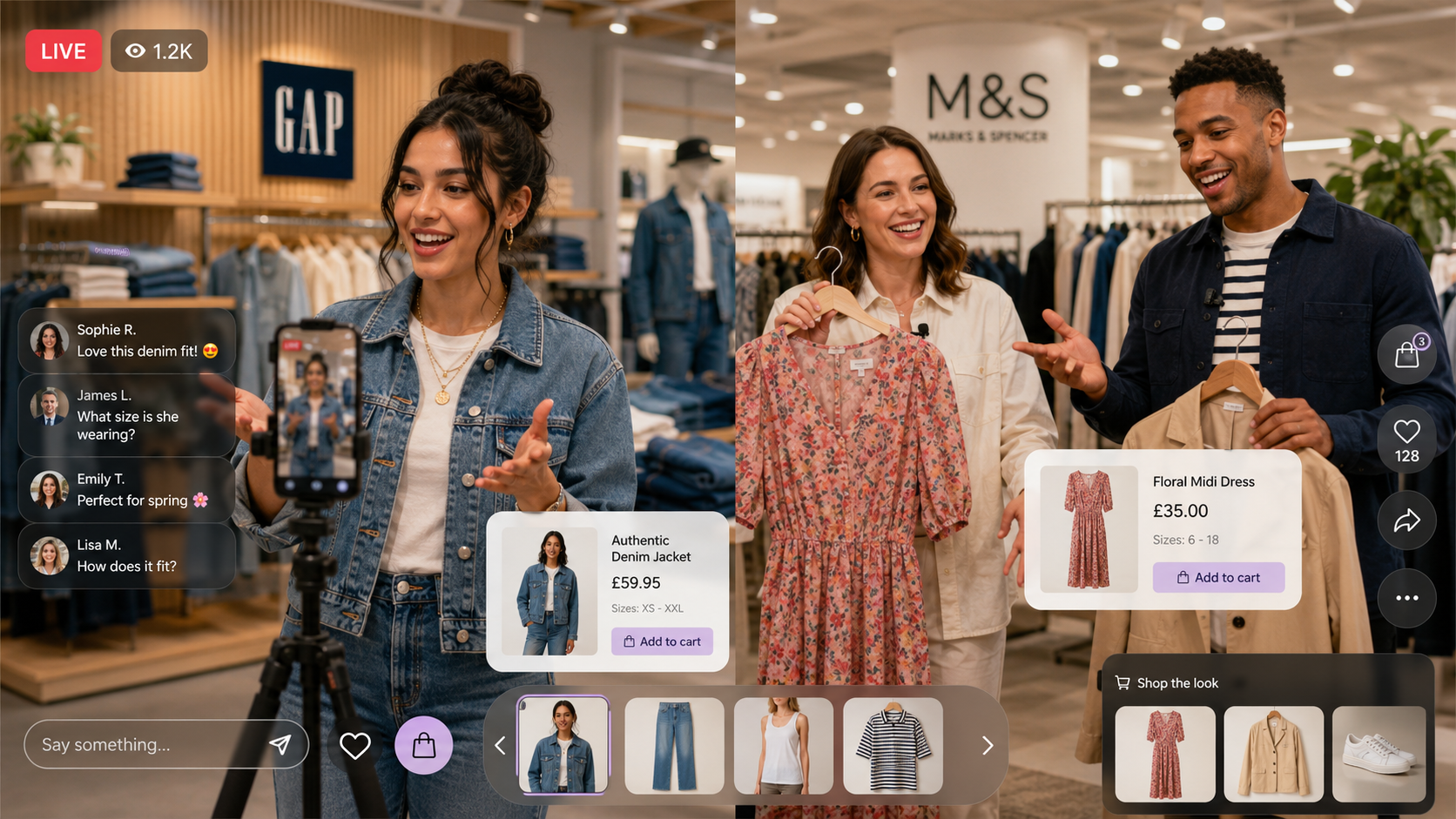
Gap Inc. expanded its Creator Affiliate Program to employees in July 2026. The move confirms a growing industry shift toward employee-generated content as a high-converting, cost-effective complement to traditional creator marketing.
Last updated: July 29, 2026
Gap just made its employees creators — and that's the signal
On July 22, 2026, Gap Inc. opened its Creator Affiliate and Advocacy Program — originally built for external creators with 1,000+ followers — to its own employees. Corporate, retail, and distribution staff across Old Navy, Gap, Banana Republic, and Athleta can now apply to become brand advocates and earn commissions on the content they publish.
The stated logic, from Damon Berger, SVP of Marketing Shared Services: "Our employees know our brands, products and customers better than anyone."
When a brand at Gap's scale makes this move, it's a signal. The industry is finally waking up to its most underestimated source of authentic, high-converting content — its own people. This isn't a rejection of creators. It's an expansion of what "creator" can mean, and it validates what the smartest owned social commerce and live shopping programs already figured out.
The reframe: employees are the most underestimated content resource in retail
Employee-generated content is one of the industry's most underestimated opportunities — a financially rational, high-converting, deeply sustainable foundation for owned social commerce and live shopping that most brands have barely tapped.
Three reasons this resource has been hiding in plain sight:
- Cost structure. Employees are already on payroll, already trained, already invested in the brand's success. The infrastructure for great content already exists inside every company.
- Knowledge depth. Employees bring something creators can't fully replicate: hands-on, day-to-day product expertise. Customers making a purchase decision benefit enormously from that depth.
- Compounding flywheel. Employee programs build momentum internally — more people opt in, more shows get produced, and institutional knowledge and enthusiasm compound over time.
Case study: Marks & Spencer's £100 live show
M&S built an employee-led live shopping program that put the financial case on paper long before Gap's announcement.
The Numbers · M&S Employee Live Shows
Beyond the headline numbers: employees who participated got genuinely invested. Enthusiasm spread internally, and more employees wanted to join the program over time. Because they bring real, deep product knowledge — fit, fabric, styling, sizing — the content led to better-informed purchase decisions, with a measurable positive knock-on effect on return rates.
This isn't just a "nice culture story." £100 per show, 2X AOV, and 3X repeat visits show just how much value has been waiting to be unlocked from an internal, underestimated resource — sitting right alongside the industry's growing embrace of creator content.
Employee-led vs. traditional creator: what the model actually looks like
| Metric | Employee-Led Program (M&S) | Typical Creator Campaign |
|---|---|---|
| Avg. production cost | £100 per show | Fee + negotiation + rights |
| Cadence | 2–4 shows/week | Campaign-based, less frequent |
| AOV impact | 2X baseline | Varies, less measurable |
| Monthly return visits | 3X baseline | Not typically tracked |
Why it works: expertise shortens the path to a confident purchase
Creator content wins on reach, discovery, and cultural relevance. Employee content wins on something else entirely: expertise plus proximity to the product. A stylist who has fitted the dress on 200 different bodies, or a buyer who chose the fabric, brings a class of information a lifestyle creator simply can't replicate at scale.
That expertise is the mechanism behind the M&S numbers. Deep product knowledge shortens the distance between "interesting content" and "confident purchase" — which is exactly why the same content produces higher AOV and lower returns.
The compounding culture effect
Employee programs don't just perform — they build on themselves. When early participants have a good experience, more colleagues opt in. Every new employee brings a fresh set of product stories, a different section of the catalog, a new audience they're already trusted by. The enthusiasm becomes part of the content itself — and it's very hard for a competitor to copy.
The Gap signal
Gap Inc.'s employee expansion is validation, not experimentation. The Creator Affiliate Program has already generated ~30,000 posts and 154M user reach since its October 2025 launch. Opening it to employees is Gap's leadership recognizing that the resource with the deepest product knowledge and the strongest brand alignment has been on payroll all along.
M&S proved the financial case. Gap is proving it scales. Every brand still framing "creator strategy" as an outside-only motion is now on the back foot.
The takeaway for brands sitting on the fence
If your brand runs a creator program, keep it — and add an employee-led owned social commerce and live shopping motion alongside it. The two are complementary: creators for reach, employees for conversion. The economics work, the compounding is real, and the data (both M&S's and now Gap's) is public.
The brands that build this muscle in the next twelve months will own a content and commerce advantage that is genuinely hard to replicate — because it's built on people who are already in the building.
Frequently asked questions
What is employee-generated content in retail marketing?
Employee-generated content (EGC) is content — video, live shopping, social posts, product reviews — produced by a brand's own employees rather than external creators or agencies. In retail, it typically features staff with direct product knowledge (stylists, buyers, store associates, category experts) using that expertise to help customers make more confident purchase decisions.
Did Gap expand its creator program to employees?
Yes. On July 22, 2026, Gap Inc. opened its Creator Affiliate and Advocacy Program to corporate, retail, and distribution employees across Old Navy, Gap, Banana Republic, and Athleta. SVP of Marketing Shared Services Damon Berger stated: "Our employees know our brands, products and customers better than anyone."
How much does it cost to produce an employee-led live shopping show?
Marks & Spencer's employee-led live shows are produced at an average cost of £100 per show, with a cadence of 2–4 shows per week. Because the on-camera talent is on payroll and the production stack is lightweight, the marginal cost of an additional show stays low.
Does employee-led content perform better than influencer content?
It performs differently — and the numbers are strong. In M&S's program, customers who engaged with employee-led live shopping spent 2X the average order value and returned to the site 3X more often per month. Employee content isn't a replacement for creator work; it's a complementary layer optimized for conversion and retention rather than top-of-funnel reach.
What is the difference between a creator program and an employee advocacy program?
A creator program partners a brand with external content creators (typically with an existing audience) to produce sponsored content. An employee advocacy program enables the brand's own staff to publish content — usually with the same commission or incentive structure — leveraging their internal product knowledge and personal networks. The two can, and increasingly do, run alongside each other.
Why do employees make effective brand advocates?
Employees combine three things creators typically can't: deep product expertise (fit, fabric, sizing, use cases), first-hand customer knowledge from daily interactions, and durable brand alignment. Audiences reward that combination with higher trust, higher conversion, and — as the M&S data shows — lower returns.
About the author
Sophie Frères leads content and go-to-market at LiSA, working directly with the retail and lifestyle brands running the largest owned social commerce and live shopping programs in Europe. LiSA's platform powers employee-led and creator-led live shopping, shoppable video, and social PDPs for brands including Marks & Spencer and Charlotte Tilbury.
Sources
- WWD — "Gap Inc. Opens Up Its Creator Affiliate and Advocacy Program to Employees" (wwd.com, July 2026).
- Gap Inc. press release confirming the employee program as the next phase of the Creator Program's evolution (gapinc.com, July 2026).
Subscribe to THE FEED to get our expert take on all things social commerce.
Industry stats, brand moves, platform changes — delivered to your inbox.
.webp)
.png)